Tシャツについて
販売:
このデザインについて
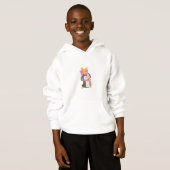
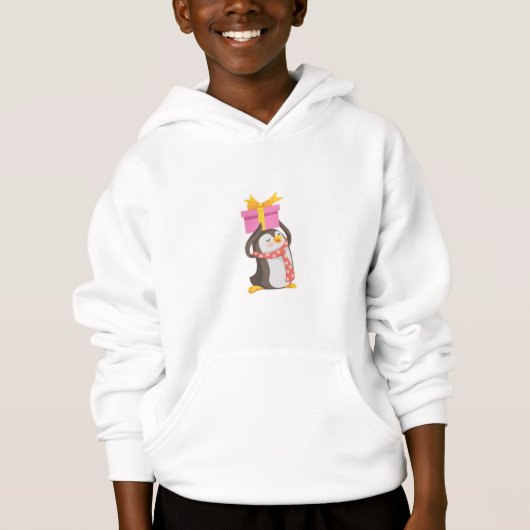
G Present Penguin
Christmas is an annual festival commemorating the birth of Jesus Christ, observed primarily on December 25[a] as a religious and cultural celebration among billions of people around the world.[2][3][4] A feast central to the Christian liturgical year, it is preceded by the season of Advent or the Nativity Fast and initiates the season of Christmastide, which historically in the West lasts twelve days and culminates on Twelfth Night.[5] Christmas Day is a public holiday in many countries,[6][7][8] is celebrated religiously by a majority of Christians,[9] as well as culturally by many non-Christians,[1][10] and forms an integral part of the holiday season organized around it.
The traditional Christmas narrative recounted in the New Testament, known as the Nativity of Jesus, says that Jesus was born in Bethlehem, in accordance with messianic prophecies.[11] When Joseph and Mary arrived in the city, the inn had no room and so they were offered a stable where the Christ Child was soon born, with angels proclaiming this news to shepherds who then spread the word.[12]
There are different hypotheses regarding the date of Jesus' birth and in the early fourth century, the church fixed the date as December 25.[b][13][14][15] This corresponds to the traditional date of the winter solstice on the Roman calendar.[16] It is exactly nine months after Annunciation on March 25, also the date of the spring equinox. Most Christians celebrate on December 25 in the Gregorian calendar, which has been adopted almost universally in the civil calendars used in countries throughout the world. However, part of the Eastern Christian Churches celebrate Christmas on December 25 of the older Julian calendar, which currently corresponds to January 7 in the Gregorian calendar. For Christians, believing that God came into the world in the form of man to atone for the sins of humanity, rather than knowing Jesus' exact birth date, is considered to be the primary purpose in celebrating Christmas.[17][18][19]
The celebratory customs associated in various countries with Christmas have a mix of pre-Christian, Christian, and secular themes and origins.[20] Popular modern customs of the holiday include gift giving; completing an Advent calendar or Advent wreath; Christmas music and caroling; viewing a Nativity play; an exchange of Christmas cards; church services; a special meal; and the display of various Christmas decorations, including Christmas trees, Christmas lights, nativity scenes, garlands, wreaths, mistletoe, and holly. In addition, several closely related and often interchangeable figures, known as Santa Claus, Father Christmas, Saint Nicholas, and Christkind, are associated with bringing gifts to children during the Christmas season and have their own body of traditions and lore.[21] Because gift-giving and many other aspects of the Christmas festival involve heightened economic activity, the holiday has become a significant event and a key sales period for retailers and businesses. Over the past few centuries, Christmas has had a steadily growing economic effect in many regions of the world.
Etymology
The English word "Christmas" is a shortened form of "Christ's Mass". The word is recorded as Crīstesmæsse in 1038 and Cristes-messe in 1131.[22] Crīst (genitive Crīstes) is from Greek Khrīstos (Χριστός), a translation of Hebrew Māšîaḥ (מָשִׁיחַ), "Messiah", meaning "anointed";[23][24] and mæsse is from Latin missa, the celebration of the Eucharist.[25]
The form Christenmas was also used during some periods, but is now considered archaic and dialectal.[26] The term derives from Middle English Cristenmasse, meaning "Christian mass".[27] Xmas is an abbreviation of Christmas found particularly in print, based on the initial letter chi (Χ) in Greek Khrīstos (Χριστός) ("Christ"), although some style guides discourage its use.[28] This abbreviation has precedent in Middle English Χρ̄es masse (where "Χρ̄" is an abbreviation for Χριστός).[27]
Other names
In addition to "Christmas", the holiday has had various other English names throughout its history. The Anglo-Saxons referred to the feast as "midwinter",[29][30] or, more rarely, as Nātiuiteð (from Latin nātīvitās below).[29][31] "Nativity", meaning "birth", is from Latin nātīvitās.[32] In Old English, Gēola (Yule) referred to the period corresponding to December and January, which was eventually equated with Christian Christmas.[33] "Noel" (also "Nowel" or "Nowell", as in "The First Nowell") entered English in the late 14th

カスタマーレビュー
5つ星評価のうち星4.8全レビュー数 5
レビュー:5
類似商品のレビュー
5つ星評価のうち星5.0
5つ星評価のうち星5田むらりゅう介2021年8月2日 • 認証済みのご注文
キッズベーシックTシャツ, ホワイト, ジュニア XS
クリエイターレビュー
Nicely graphical design is cool enough for kids!! Very pop, clearly Printed. Hopefully people get this.
5つ星評価のうち星5.0
5つ星評価のうち星5yasue a.2020年9月8日 • 認証済みのご注文
Zazzleレビュープログラム
150cm,41kg でちょうどいい感じです。
Mr.ping が大好きで探していたので
公式であって嬉しかったです! とてもきれいで、可愛かったです!
日本にこんなにすぐ届くとは思いませんでした。
元の商品
5つ星評価のうち星5.0
5つ星評価のうち星5 S.2012年8月26日 • 認証済みのご注文
キッズベーシックTシャツ, ホワイト, ジュニア M
Zazzleレビュープログラム
サイズも素材もとても良いです。特に女性のこの手のキャミは長さが重要なポイントだと思います。程よく長すぎず、でも短くないことが重要です。その点が非常に満足です。フィットする形がとても満足です。もうちょっと安くしてほしいかな・・・・・・・。一番の満足はデザインですw こちら以外ではアルマジログッズがなかなかなくて、探していてZazzleにたどり着きました。この 「I ラブ」デザインは定番ですが、定番だからこそシンプルで、イメージが把握しやすいと感じております。赤がとても綺麗な色で、上着を羽織った時に、少し見えるのが、ポイントになりおすすめです。剥げたりするような印刷ではないです。
タグ
その他の情報
商品 ID: 235036475714010766
出品日: 2022/12/5 10:41
レーティング: G